ACORD Form Preparation Starts with Better Source Information
Prepare supported ACORD forms with clear source information, visible gaps, and a defined review and handoff process.

Understand the difference between checking and comparison, organize policy findings, and give reviewers the context needed to act.
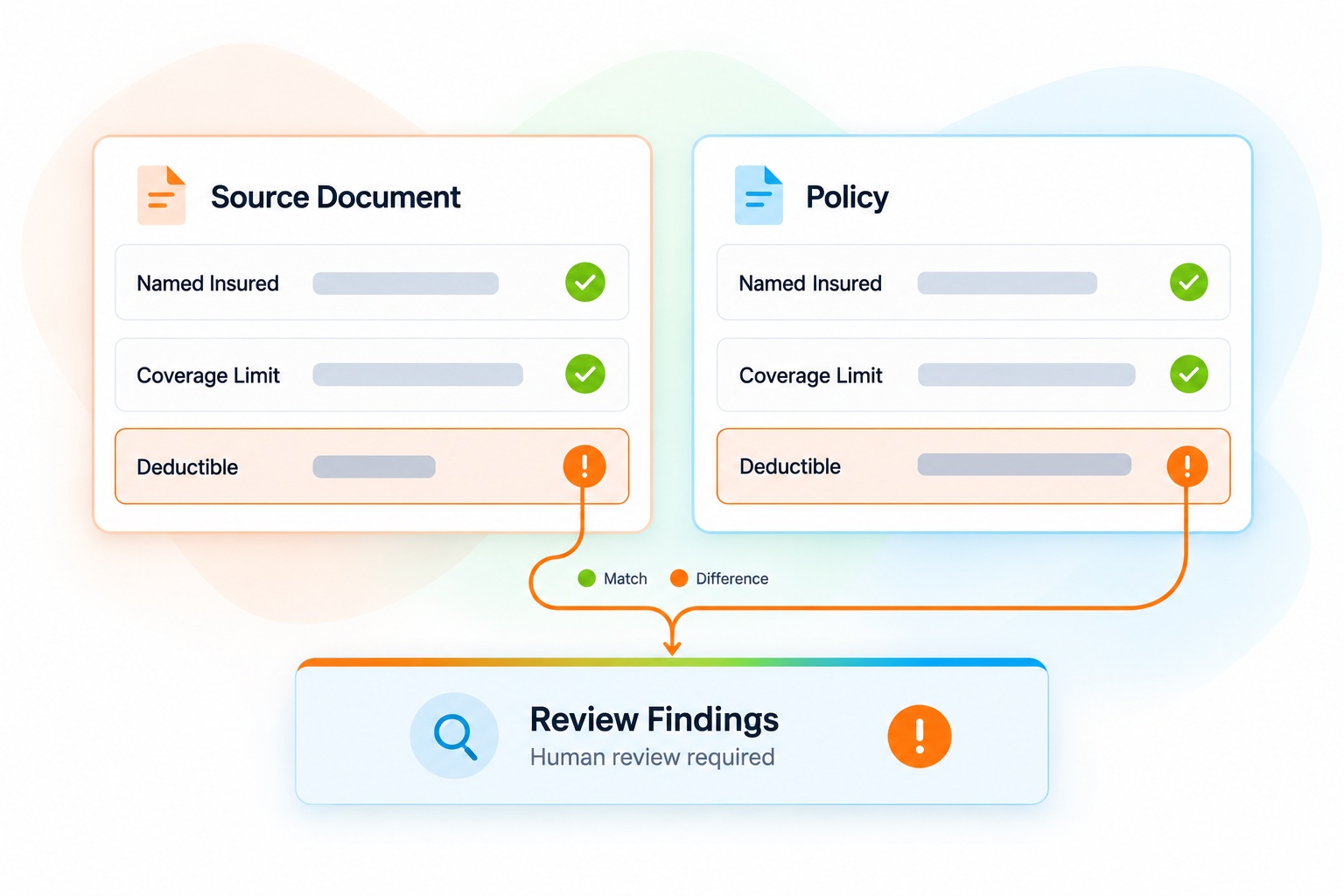
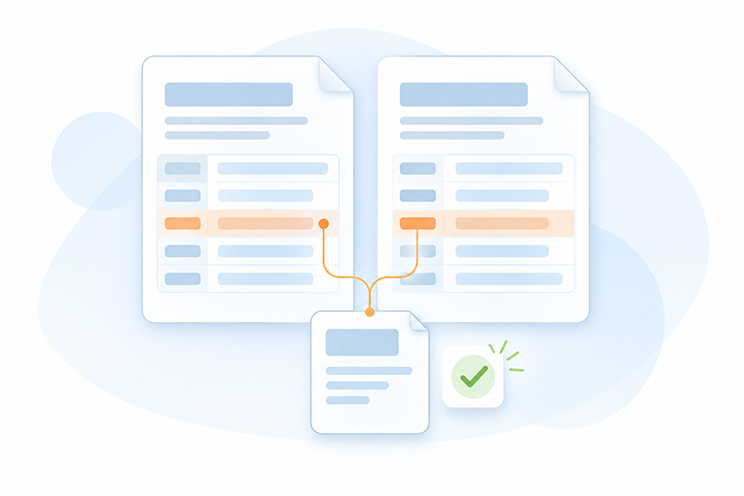
Policy checking and policy comparison support related, but different, questions. Checking asks whether the issued policy matches the selected source documents. Comparison asks what changed between documents, such as an expiring policy and its renewal.
Both tasks benefit from a defined scope, complete source material, and a clear way to record findings. Policy IQ brings these activities into an organized review process, helping teams identify differences and prepare them for human verification.
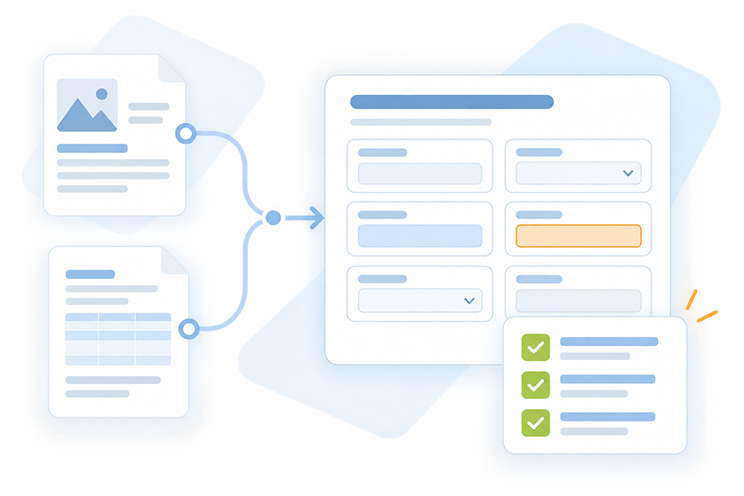
For policy checking, identify which quote, binder, application, or other source should be used. For a renewal comparison, confirm that the selected documents belong to the correct account, period, and coverage.
This first step matters because an apparent discrepancy may come from comparing the wrong versions. Record which documents were supplied and what the review covers. If a source is incomplete, make that limitation visible before anyone relies on the result.
Policy IQ’s checking workflow covers six areas: automated document comparison; policy detail validation; coverage and limit verification; forms and endorsement review; discrepancy identification; and human review and reporting.
Within that structure, check insured information, policy identifiers, carriers, and effective dates. Then review coverages, limits, deductibles, and premiums against the selected sources. Keep forms, endorsements, and exclusions within the scope instead of treating the declarations alone as the complete review.
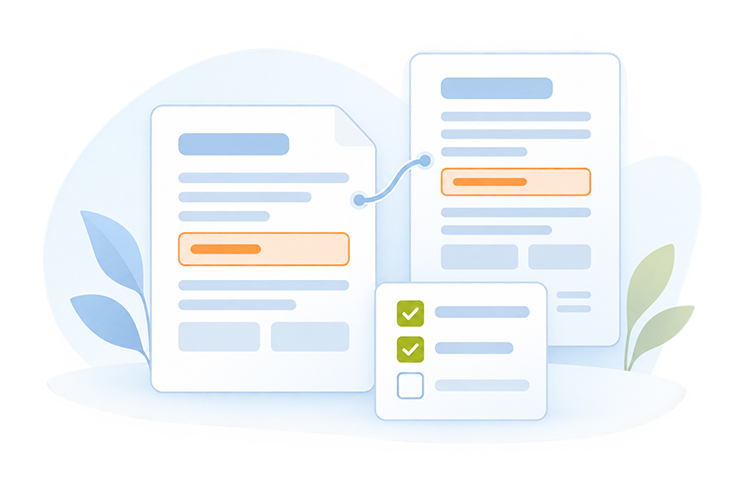
A finding should explain what differs and where the supporting information appears. “Deductible changed” is a starting point. A more useful record identifies the old and new values, the documents involved, and the section that needs checking.
An AI-generated finding still needs verification. A missing reference in a supplied copy does not establish that a provision is absent from the complete policy. Check the full document set and resolve uncertainty before deciding what the finding means.
Finding a difference and interpreting its effect are different activities. A premium change may need additional context. Similar-looking wording may require a closer reading. A newly listed endorsement may need review against the relevant terms and the organization’s checking requirements.
Insurance professionals should determine which differences require correction, clarification, or further discussion. Use the comparison to focus their attention while retaining access to the original wording. Avoid treating a summary as a substitute for the source.
A discrepancy list is most useful when the team can see what happened next. Identify who reviewed the issue, what additional information was obtained, and whether a correction or follow-up remains open.
For a renewal, the final review should make confirmed changes easy to discuss. For an issued policy, it should show the result of checking against the selected sources. Preserve the distinction so the report answers the question the team set out to resolve.
Bring a representative policy, its supporting documents, and your current checking checklist to a demo. Include an example with a known discrepancy so the review can address source references and exception handling.
Agree on the review scope and reporting needs before expanding the workflow. Policy IQ can help organize comparisons and findings, while your reviewers verify the details and apply the insurance judgment needed for the next action.



One Platform. Smarter Insurance Operations. Start Your Journey Today.