From Insurance Emails to Clear Next Steps
A practical approach to organizing requests, keeping source context connected, and reviewing draft responses with Inbox IQ.

Ask focused questions, check the original material, and prepare useful responses with an insurance knowledge assistant.
Insurance teams often need a specific detail buried in a longer document. They may want to understand a requested change, prepare a summary, or find the information needed to respond to a colleague. An AI assistant is most useful when the question and the available source material are clearly defined.
Ask AIVA helps teams explore approved documents, summarize information, and prepare responses for review. The aim is to make relevant context easier to work with while keeping final interpretation and decisions with the people responsible for them.
Before asking a question, confirm which documents or knowledge sources are available in the workflow. Check that the material belongs to the correct account, version, and period for the task you are performing.
An answer drawn from an earlier document may not address a question about a newer one. Keep version differences visible and avoid assuming that all relevant material has been supplied. Source availability and access requirements should be established during implementation.
A focused question gives the assistant a clearer task. Instead of asking for everything about a document, identify the section, issue, or information you need. State whether you want a summary, a comparison of supplied passages, or a draft explanation for review.
For example, ask the assistant to summarize the renewal changes described in the supplied documents and identify information that still needs confirmation. This defines the material and the intended output without asking the assistant to make a final professional decision.
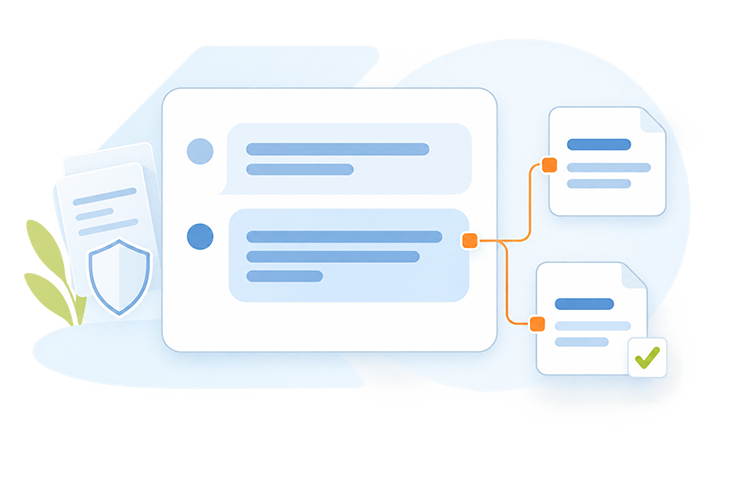
Read the relevant original wording before relying on an important detail. Source references, where available, help the reviewer locate the context behind the response. A short summary may leave out a qualification that matters to the task.
If the answer appears broader than the material supports, ask a follow-up question or refer it to an appropriate reviewer. The useful result is a response you can trace and verify. Fluency by itself does not establish that an answer is complete or correct.
An incomplete source can lead to an incomplete answer. When the question cannot be resolved from the available material, identify what is missing and who can provide it. Additional approved documents may be needed before the work continues.
Avoid repeatedly rephrasing a question simply to obtain a confident answer. Clarify the source, narrow the request, or escalate the issue. These actions give the team a practical route forward while making the limits of the available information visible.
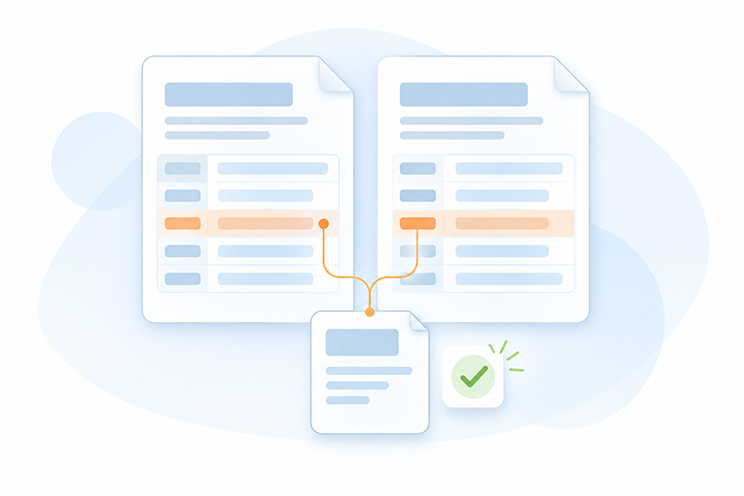
Ask AIVA can help prepare an explanation or reply, but the reviewer should confirm that it addresses the actual question and uses suitable wording. Check names, dates, attachments, and any statements that depend on insurance interpretation.
A response written for an internal reviewer may need a different level of detail from one intended for a client. Define the audience and purpose when preparing the draft, then complete the approvals your organization requires before sharing it.
Start with common questions your team encounters and the approved documents needed to answer them. Include examples that have clear answers and examples that should be escalated because the source is incomplete.
Use these cases in an Ask AIVA demo to discuss knowledge sources, access, source context, and review requirements. A well-defined process helps the assistant support daily work while your team retains control of the final answer and next action.



One Platform. Smarter Insurance Operations. Start Your Journey Today.